
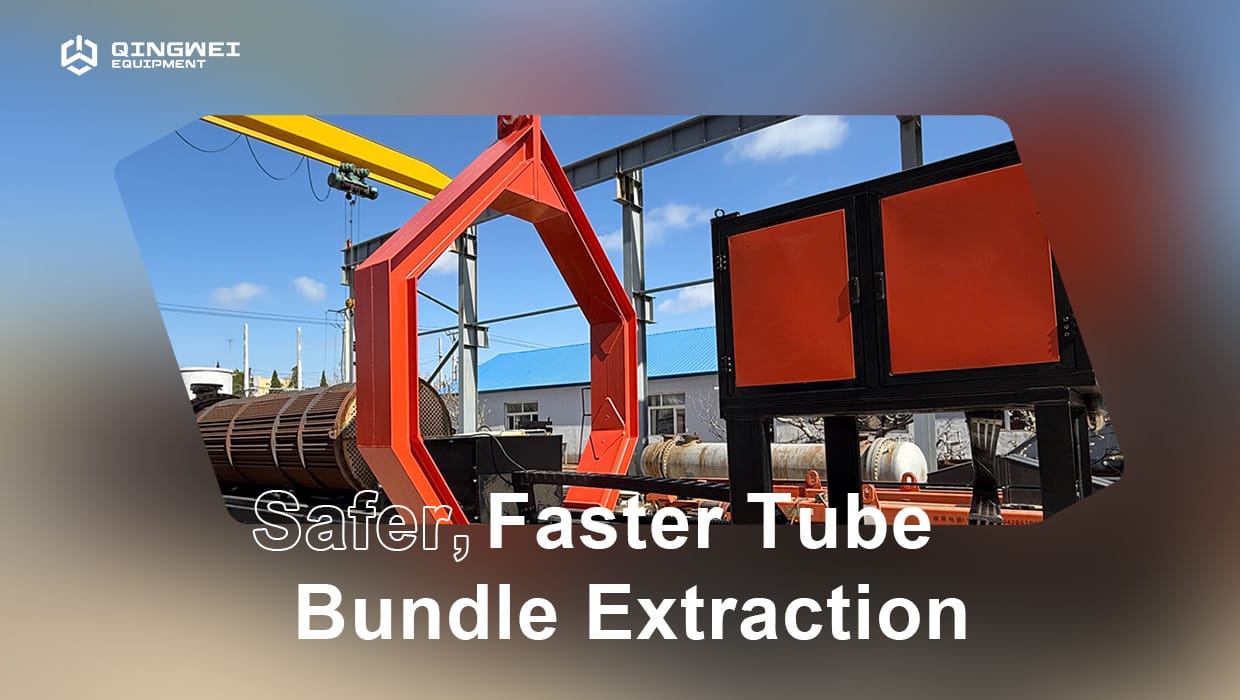
A tube bundle extractor, also called a bundle puller, is an important machine for shell-and-tube heat exchanger maintenance. It can help maintenance teams remove heavy tube bundles with better control than traditional pulling methods. However, the real efficiency of the equipment depends not only on the machine itself, but also on how well the site is prepared before operation.
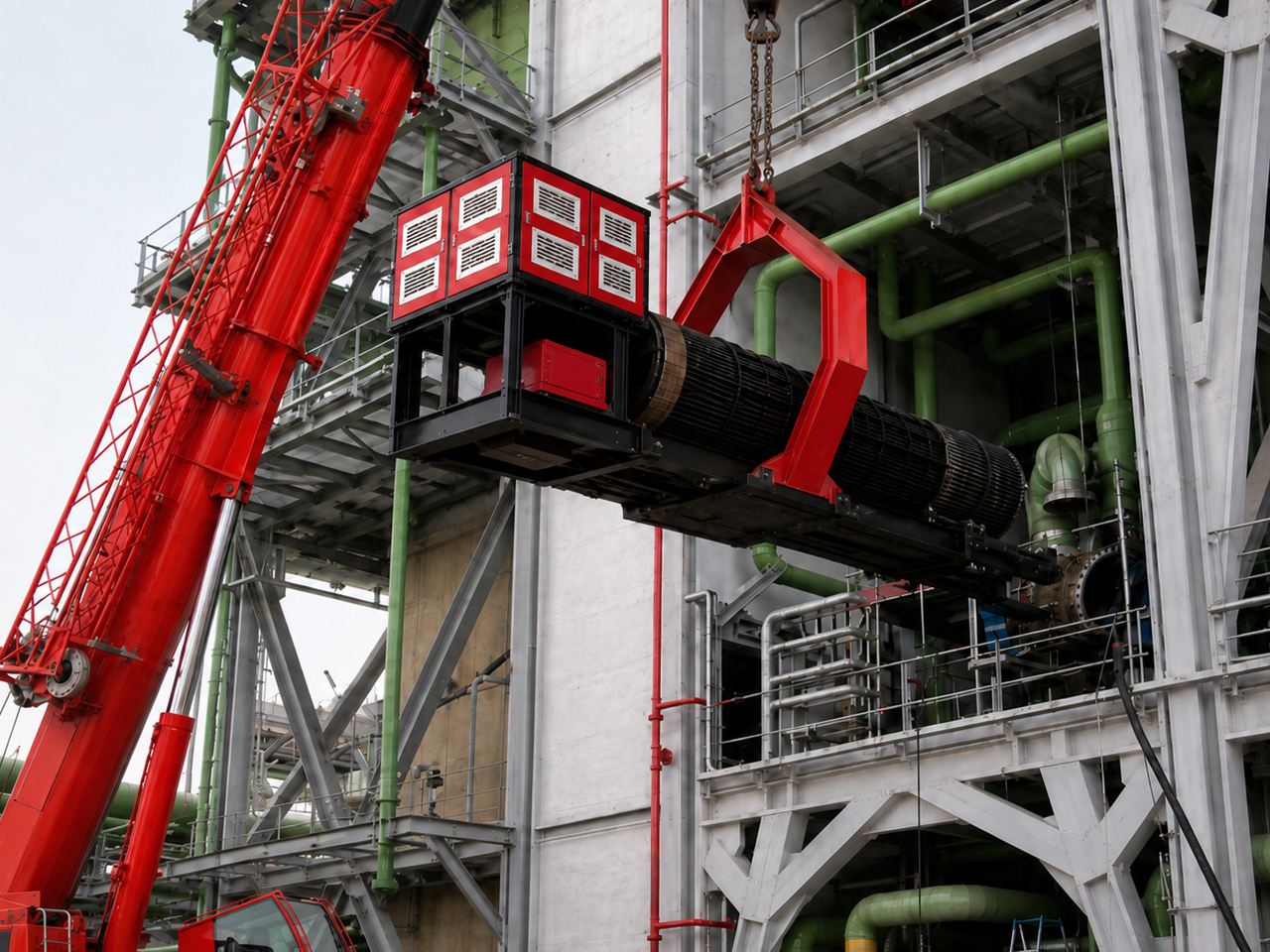
In refinery turnarounds, delays often come from small details: the bundle is heavier than expected, the extractor cannot align with the exchanger centerline, the crane working radius is not enough, the ground is uneven, or the bundle is strongly stuck due to sludge, scale or corrosion. A clear site preparation checklist can help engineers, contractors and procurement teams select the right equipment and reduce risks before shutdown work begins.
1. Confirm the Basic Tube Bundle Data
The first step is to collect accurate tube bundle information. A tube bundle extractor should not be selected only by pulling force. The machine structure, support trolley, working length, clamping method and extension design must match the real bundle dimensions and site layout.
- Maximum tube bundle weight
- Maximum tube bundle length
- Tube sheet diameter or bundle outside diameter
- Tube sheet thickness
- Heat exchanger centerline height
- Bundle extraction direction
- Estimated fouling, corrosion or adhesion condition
- Available working space in front of the exchanger
If the bundle has been operating for many years, the required pulling force may be much higher than the theoretical bundle weight. Scale, sludge, rust and shell-side deposits can increase the initial extraction resistance. This is why experienced teams usually add a reasonable safety margin when choosing a bundle extractor.
2. Check the Available Working Space
Working space is one of the most common limitations during heat exchanger maintenance. The extractor needs enough room for positioning, alignment, pulling stroke, bundle support and crane operation. If the exchanger is located inside a steel structure, pipe rack area or narrow workshop, the available space should be measured carefully.
- Total available length in the extraction direction
- Clearance on both sides of the exchanger
- Height restrictions from platforms, beams or pipelines
- Access route for transporting the extractor to the work area
- Turning radius for forklift, crane or trailer movement
- Safe standing position for operators during remote-control operation
For long bundles, a detachable extension design may be required. For restricted sites, a shorter base machine with front or rear extension sections can help the contractor adapt to the actual site without losing the required bundle handling length.
3. Verify Ground Bearing Capacity and Site Levelness
A tube bundle extractor carries heavy loads during extraction and reinstallation. The working ground should be strong, stable and as level as possible. Uneven ground may affect alignment between the extractor and the heat exchanger, increasing the risk of side loading, unstable movement or additional resistance.
Ground preparation
- Confirm ground bearing capacity
- Remove loose materials, oil, mud and obstacles
- Use steel plates or support mats if required
- Keep the extractor parallel to the exchanger centerline
Why it matters
Good ground preparation helps reduce vibration, improves alignment and supports safer cooperation between the extractor, crane and site personnel during bundle pulling.
4. Plan the Lifting and Support Arrangement
Even when a tube bundle extractor performs the pulling work, lifting equipment is often required for positioning, auxiliary support or final handling. The crane plan should be considered together with the extractor plan, not as a separate issue.
- Will a crane be used to place the extractor?
- Will the crane support the tube bundle during extraction?
- Is there enough lifting height above the bundle?
- Are lifting points available and suitable?
- Is the crane capacity enough at the required working radius?
- Can the crane operator and extractor operator communicate clearly?
A well-planned lifting arrangement helps prevent misalignment and sudden load changes. It also reduces the chance of damaging the tube sheet, bundle, shell or surrounding equipment.
5. Choose Diesel or Electric Power According to Site Conditions
Power type should be selected according to the actual working environment. A diesel tube bundle extractor is often preferred for outdoor refinery sites, remote maintenance areas and shutdown work where stable electrical power may not be available. It provides strong field adaptability and independent operation.
An electric tube bundle extractor is suitable for workshops, indoor maintenance bays and sites with reliable power supply. It offers low noise, no engine exhaust and clean operation, which can be valuable in controlled maintenance environments.
| Item to Check | Why It Matters | Possible Influence on Selection |
|---|---|---|
| Indoor or outdoor operation | Determines ventilation, exhaust and mobility requirements. | Outdoor sites often prefer diesel; indoor workshops often prefer electric. |
| Available voltage and frequency | Electric equipment requires stable and suitable power supply. | Unstable power may make diesel more practical. |
| Noise and exhaust restrictions | Some sites have strict environmental or safety controls. | Electric models may be more suitable for controlled areas. |
| Shutdown schedule | Short turnaround windows require reliable continuous operation. | The model should match both force requirement and field availability. |
6. Evaluate Fouling, Corrosion and Initial Pulling Resistance
The first movement is often the most difficult stage of tube bundle extraction. A bundle may be stuck after years of operation due to scale, sludge, corrosion or deformation. In many projects, the starting resistance is higher than the force required after the bundle begins to move.
Before selecting the model, the maintenance team should review the service history of the heat exchanger. Units with heavy deposits, high-temperature service, long maintenance intervals or corrosive media may require a higher pulling force margin.
7. Prepare the Safety Zone and Communication Method
Tube bundle extraction involves heavy equipment, hydraulic movement and large components. The work area should be controlled before operation begins. Only authorized personnel should stay inside the working zone, and all operators should understand the extraction sequence.
- Set a clear exclusion zone around the extractor and tube bundle
- Confirm the operator position and remote-control range
- Assign one person to coordinate site communication
- Check emergency stop function before operation
- Protect hydraulic hoses, cables and moving parts
- Keep personnel away from the pulling line and suspended loads
- Review the job safety analysis before work starts
A remote-control system allows the operator to stand in a safer position while maintaining visibility of the bundle movement. This is especially useful when the exchanger is located in a restricted or high-risk area.
8. Check Accessories, Tools and Spare Parts
Before the turnaround begins, the team should confirm that all required accessories and tools are available. Missing small items can cause unnecessary delays during a tight maintenance schedule.
- Clamping tools and connection parts
- Hydraulic oil and basic maintenance tools
- Remote-control battery or charging equipment
- Spare seals, hoses or fittings if required
- Steel plates, support blocks or temporary mats
- Lifting slings, shackles and certified rigging tools
- Lighting equipment for night work or indoor areas
- Operation manual and communication procedure
For overseas projects, preparing key spare parts in advance can help reduce downtime risk. Qingwei can provide standard accessories and spare parts according to the selected model and project requirements.
9. Confirm the Extraction and Reinstallation Procedure
Tube bundle extraction is not only a pulling operation. In many maintenance projects, the bundle must also be reinstalled after cleaning, inspection or repair. The equipment plan should cover both removal and reinstallation.
- Will the same extractor be used for reinstallation?
- Is precise alignment required during bundle insertion?
- Will the bundle be moved to a cleaning area after extraction?
- Is there enough space for temporary storage?
- How will the bundle be supported during inspection?
- What is the planned sequence with other maintenance activities?
A complete procedure helps avoid conflicts between different work groups and improves the overall turnaround schedule.
10. Share Site Information Before Final Model Selection
For accurate model selection, the supplier should receive more than a simple pulling force requirement. The best recommendation is usually based on bundle size, bundle weight, exchanger height, site layout and working environment.
Before requesting a quotation, prepare drawings, photos or a simple layout sketch. Even basic site photos can help engineers understand access limitations, foundation condition, steel structure interference and crane arrangement.
Technical data to send
- Tube bundle length, diameter and weight
- Tube sheet thickness
- Heat exchanger centerline height
- Required pulling force or estimated resistance
Site information to send
- Site photos and layout drawing
- Indoor or outdoor working condition
- Diesel or electric power preference
- Destination country and project schedule
Conclusion: Better Preparation Means Safer Bundle Pulling
A tube bundle extractor is an important machine for refinery, petrochemical and industrial heat exchanger maintenance. But to achieve safer and more efficient bundle pulling, the worksite must be prepared correctly. Accurate bundle data, enough working space, stable ground, proper lifting support, suitable power selection and clear safety control are all essential before operation begins.
Qingwei Equipment manufactures diesel and electric tube bundle extractors for heat exchanger maintenance, refinery shutdowns and petrochemical turnaround projects. If you are planning a bundle extraction project, send us your tube bundle length, diameter, weight and site conditions. Our team can help recommend a suitable configuration for your job.
FAQ
What information is needed before choosing a tube bundle extractor?
The most important information includes tube bundle weight, length, diameter, tube sheet thickness, exchanger centerline height, working space, site condition and estimated fouling or adhesion level.
Why is site preparation important for bundle extraction?
Good site preparation helps ensure proper alignment, safe operation, stable support and smoother extraction. Poor preparation may cause delays, misalignment, equipment difficulty or safety risk.
Should I choose a diesel or electric tube bundle extractor?
Diesel models are suitable for outdoor, remote or temporary shutdown sites where power supply is limited. Electric models are suitable for workshops, indoor maintenance areas and sites with stable power supply.
Does tube bundle weight equal required pulling force?
No. Tube bundle weight is only one factor. Fouling, corrosion, adhesion and long service history can increase the initial extraction resistance, so a reasonable pulling force margin is often recommended.
Need help preparing for bundle extraction?
Send us your tube bundle weight, length, diameter, working height and site photos. Qingwei can recommend a suitable diesel or electric tube bundle extractor configuration.