
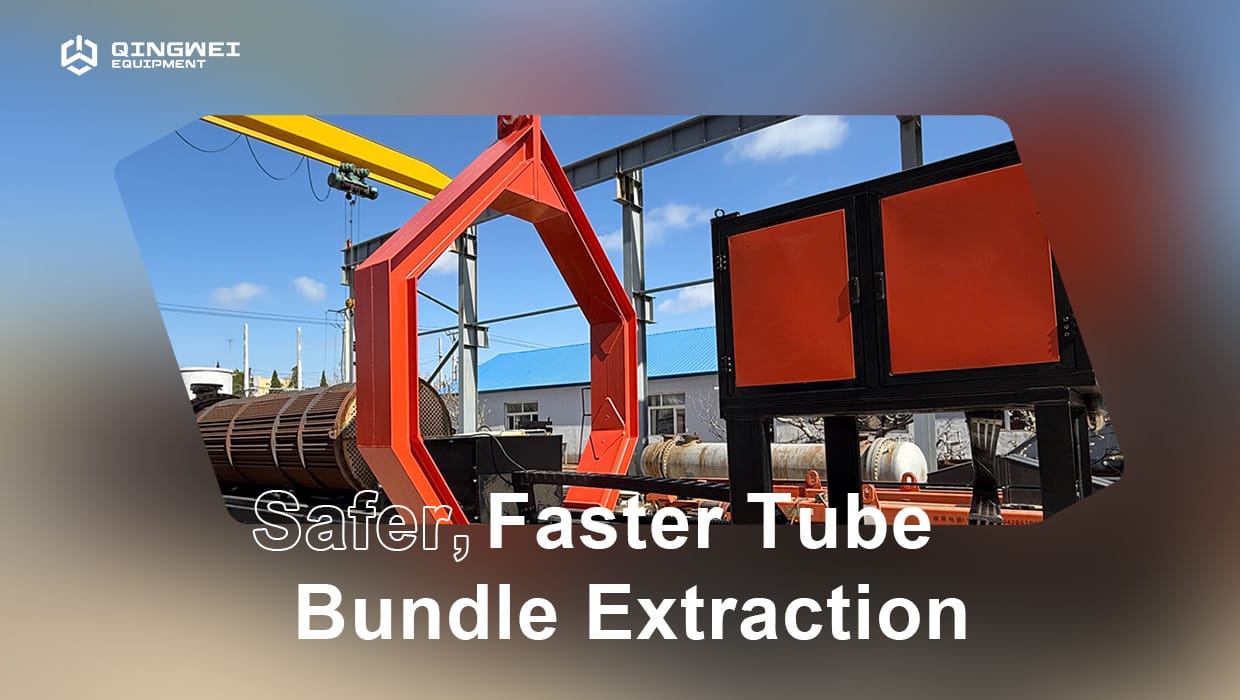
When a refinery, petrochemical plant, or heat exchanger service company plans a shutdown maintenance project, one of the most important pieces of equipment is the tube bundle extractor. It is also commonly called a bundle puller. This machine is used to remove and reinstall tube bundles from shell and tube heat exchangers safely, efficiently, and with better control.
Choosing the right tube bundle extractor is not only about pulling force. It also involves bundle length, bundle weight, working height, site space, power source, safety requirements, and the real working conditions of the maintenance site. A suitable machine can help reduce shutdown time, protect the tube bundle, improve jobsite safety, and make maintenance work more predictable.
This article explains the key factors to consider when selecting a tube bundle extractor for industrial heat exchanger maintenance.
1. Understand the Tube Bundle Size and Weight
The first step is to confirm the main data of the heat exchanger tube bundle. Before choosing a bundle extractor, the maintenance team should collect the following information:
- Maximum tube bundle length
- Maximum tube bundle diameter
- Maximum tube bundle weight
- Tube sheet thickness
- Required pulling distance
- Working height from ground or platform
These details are critical because the tube bundle extractor must support the bundle during pulling and pushing. If the bundle is longer or heavier than expected, the machine may not provide enough support length or safety margin.
For example, a tube bundle with heavy fouling or sludge may require more pulling force than the theoretical bundle weight suggests. In real maintenance work, stuck bundles are common, especially in refineries, chemical plants, and heat exchangers that have operated for a long time without complete cleaning.
2. Select the Correct Pulling Force
Tube bundle extractors are usually selected according to pulling force, such as 25T, 35T, 45T, 50T, 65T, 80T, 100T, or higher. The correct pulling force depends on the bundle weight, operating condition, fouling level, and site experience.
A common mistake is to choose a machine only based on the bundle weight. In actual maintenance, the required extraction force may be much higher because of corrosion, deposits, tube expansion, deformation, or long-term sticking between the bundle and shell.
For safer operation, it is usually better to keep enough force margin. If a project is close to the limit of a smaller model, a higher-capacity tube bundle extractor may be more suitable. This can reduce operational risk and avoid delays during shutdown work.
3. Consider the Working Length and Extension Design
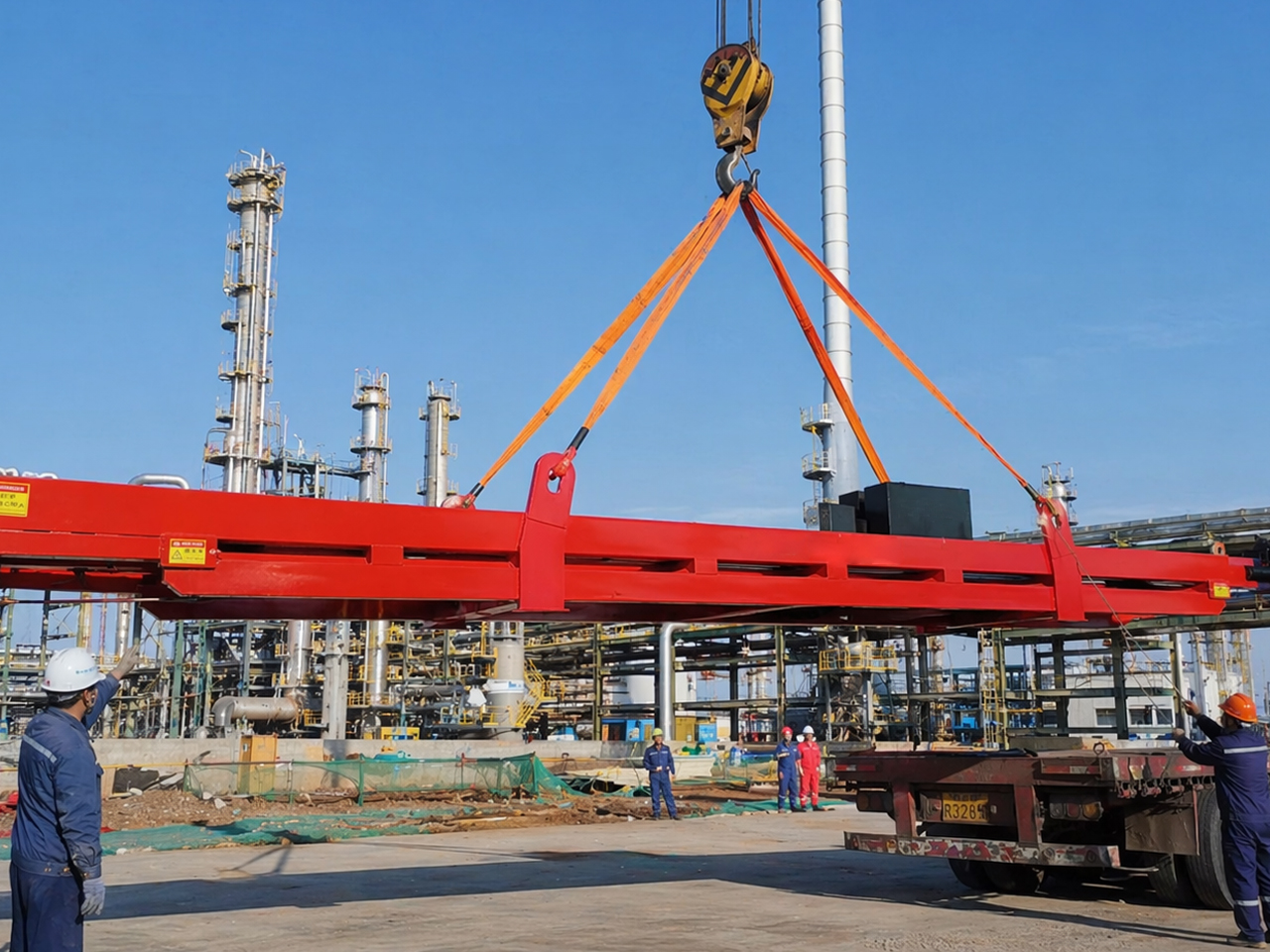
The working length of the tube bundle extractor should match the maximum bundle length. In some projects, the machine may need a base working length with removable extensions. For example, an 8-meter base machine can be equipped with a 2-meter rear extension, or a 10-meter machine can be designed with additional front or rear extensions.
This design is useful when the jobsite has limited space. In refinery or petrochemical plants, heat exchangers are often installed close to steel structures, pipelines, platforms, or other equipment. A detachable extension system helps the maintenance team adapt to different site conditions.
When selecting the machine, the buyer should not only check the maximum bundle length, but also confirm whether the site has enough operating space for the machine, the bundle, the crane, and the support area.
4. Check the Jobsite Space and Working Height
A tube bundle extractor is often used in complex maintenance environments. Some heat exchangers are installed at ground level, while others are located on high platforms or inside steel structures. Before purchasing a machine, it is important to review the site layout carefully.
Key questions include:
- Is the heat exchanger located on the ground or on a platform?
- Is there enough space in front of the exchanger?
- Are there pipes, columns, or structures blocking the extractor?
- What is the working height of the exchanger centerline?
- Is crane support available during operation?
These questions help determine the machine configuration, support system, and whether special customization is required.
5. Diesel or Electric Tube Bundle Extractor
Another important decision is the power source. Tube bundle extractors are commonly available in diesel and electric versions.
A diesel tube bundle extractor is suitable for outdoor maintenance, remote sites, and projects where electric power supply is not convenient. It offers strong mobility and independent operation.
An electric tube bundle extractor is suitable for plants where stable power supply is available. It can be a good choice for workshops, indoor maintenance areas, or sites with strict exhaust emission control.
In many international projects, diesel models are often preferred because they are easier to operate independently on site. However, the final choice should depend on the project location, plant rules, safety requirements, and available power supply.
6. Safety and Control System
Safety is one of the most important considerations in bundle pulling work. A good tube bundle extractor should provide stable support, controlled movement, reliable hydraulic performance, and easy operation.
Useful safety and control features may include:
- Hydraulic pulling and pushing system
- Remote control operation
- Stable bundle support trolley
- Automatic or adjustable balance system
- Controlled extraction speed
- Emergency stop function
- Reliable braking and positioning system
- Strong structural frame
Remote control is especially helpful because the operator can stand at a safer position and observe the bundle movement during extraction. This can reduce direct exposure to high-risk areas near the heat exchanger.
7. Pay Attention to Structural Strength and Hydraulic Reliability
A tube bundle extractor works under heavy load and harsh industrial conditions. Therefore, the structure and hydraulic system must be strong and reliable.
The main frame should be designed to handle high pulling force and bundle weight. Welding quality, steel structure, machining accuracy, hydraulic cylinder performance, hoses, valves, and control components all affect long-term reliability.
For refinery shutdowns, equipment failure can cause serious delays. This is why choosing a machine with stable hydraulic performance and proven structural design is very important.
8. Ask for Technical Drawings and Confirmation Before Production
Before ordering a tube bundle extractor, the buyer should request technical confirmation from the manufacturer. This may include:
- Technical datasheet
- General arrangement drawing
- Main dimensions
- Working length
- Pulling force
- Bundle support method
- Weight and transportation dimensions
- Power system details
- Optional extension design
A professional manufacturer should be able to review the buyer's bundle data and site conditions before finalizing the machine design. This helps avoid mismatches between the equipment and actual site requirements.
9. Choose an Experienced Tube Bundle Extractor Manufacturer
Tube bundle extraction is a practical field. Real maintenance experience matters. A manufacturer with long-term experience can better understand jobsite challenges, such as limited space, heavy bundles, fouled bundles, high platforms, and different refinery maintenance requirements.
When selecting a supplier, buyers should consider:
- Manufacturing experience
- Previous project references
- Customization ability
- Hydraulic system experience
- Testing before shipment
- Spare parts support
- Operation and maintenance training
- After-sales technical support
For international projects, it is also useful to confirm whether the supplier can provide technical documents, packing information, training support, and remote troubleshooting assistance.
Conclusion
Choosing the right tube bundle extractor is a key decision for shell and tube heat exchanger maintenance. The right equipment can improve safety, reduce shutdown time, and protect valuable tube bundles during extraction and installation.
Before selecting a machine, buyers should carefully confirm bundle length, bundle weight, required pulling force, site space, working height, power source, and safety requirements. A professional tube bundle extractor manufacturer can help review these details and recommend a suitable model based on real project conditions.
Qingwei provides tube bundle extractors for refinery, petrochemical, chemical plant, and heat exchanger maintenance applications. We can support customers with technical selection, customized configurations, drawings, and operation guidance according to project requirements.
If you are planning a heat exchanger maintenance project and need a reliable tube bundle extractor or bundle puller, please contact our team for technical support and model selection.
FAQ
What information is needed before choosing a tube bundle extractor?
The most important information includes tube bundle length, diameter, weight, tube sheet thickness, required pulling distance, working height, site space, power source availability, and estimated fouling or adhesion condition.
How do I select the correct pulling force for a tube bundle extractor?
The correct pulling force depends on bundle weight, operating condition, fouling level, corrosion, and long-term adhesion. It is usually safer to keep a reasonable force margin rather than choosing the minimum capacity.
Should I choose a diesel or electric tube bundle extractor?
Diesel models are suitable for outdoor, remote, or temporary shutdown sites where power supply is limited. Electric models are suitable for workshops, indoor maintenance areas, and sites with stable power supply and strict emission controls.
What safety features are important in a tube bundle extractor?
Important safety features include remote control operation, stable bundle support trolley, controlled extraction speed, emergency stop function, reliable braking system, and strong structural frame for heavy load conditions.
Need help choosing a tube bundle extractor?
Send us your tube bundle length, diameter, weight and site conditions. Qingwei can recommend a suitable diesel or electric bundle extractor configuration.