
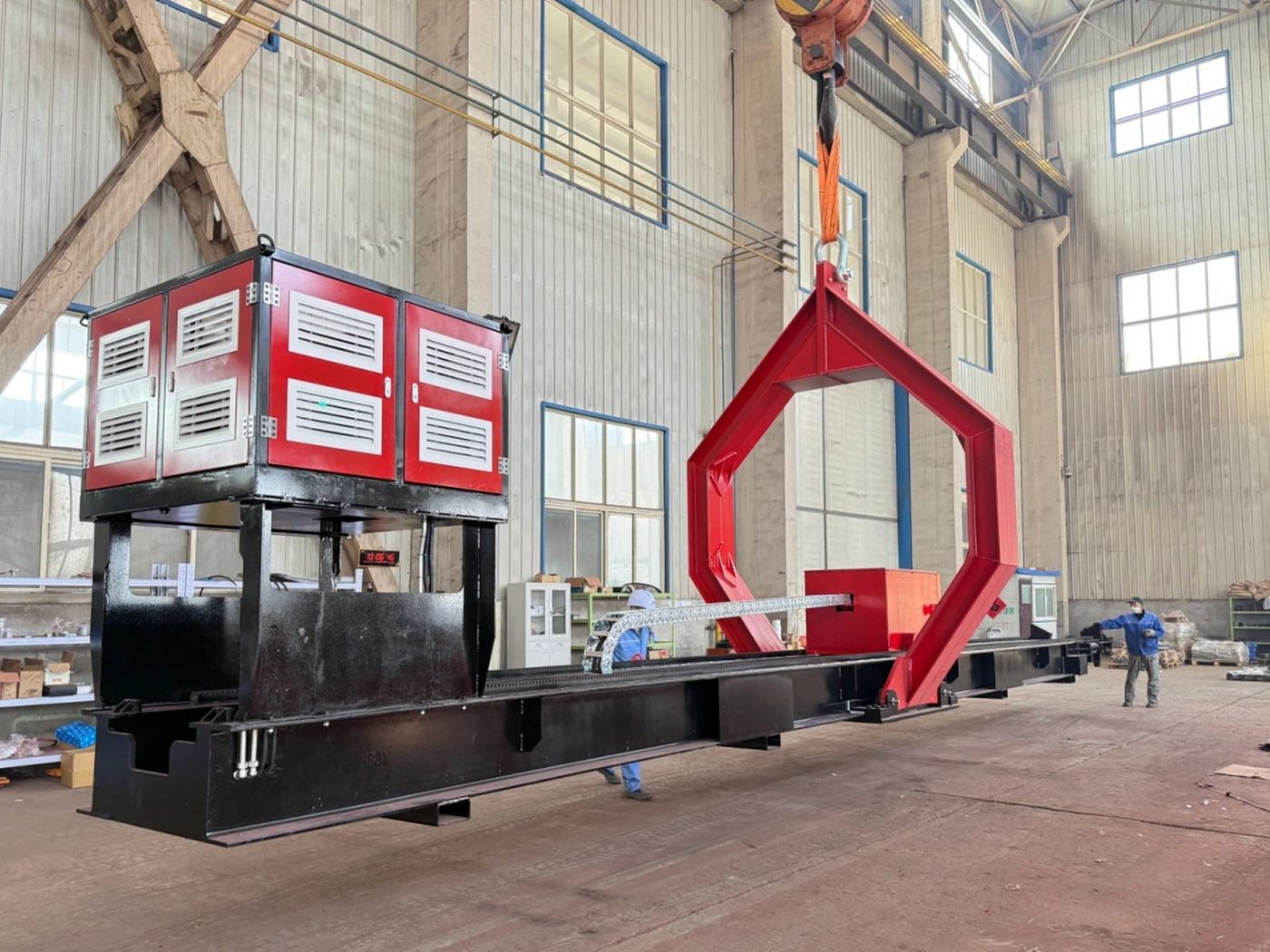
Selecting a tube bundle extractor starts with the actual exchanger, bundle and worksite. Capacity is important, but a useful selection also confirms working length, diameter compatibility, centreline height, extraction clearance, lifting arrangements, power, controls and transport.
The aim is not to choose the largest machine or match capacity one-to-one with bundle weight. The aim is to confirm a configuration that can be positioned, supported, operated and transported for the real maintenance task.
1. Separate Bundle Weight From Pulling Resistance
Bundle weight is the load reference for support and lifting. Pulling resistance is the axial force needed to release and move the bundle. Fouling, corrosion, deposits, adhesion, previous extraction history and alignment can make the required force higher than the weight alone suggests.
Review the Pulling Force Guide before selecting capacity.
2. Confirm Bundle Length
Bundle length determines the extractor working length, travel and support plan. It also affects transport dimensions and the space required in front of the exchanger. Send the confirmed dimension rather than relying on an approximate exchanger size.
3. Confirm Bundle Diameter
Diameter affects frame and support compatibility. Confirm the maximum outside diameter and any features that may interfere with the planned support or travel path.
4. Measure Exchanger Centreline Height
The machine must align with the exchanger. Record the vertical centreline from the actual working level and identify whether the exchanger is at grade, elevated on steelwork or located inside a restricted structure.
5. Measure Working Clearance
Confirm the straight-line distance available for the extractor and bundle travel. Include pipe racks, columns, cable trays, scaffolding, road access, adjacent equipment and temporary turnaround activities. Site photos and a layout drawing are valuable when clearance is limited.
6. Define the Lifting Arrangement
Identify how the extractor will be lifted, positioned and supported. Aerial extraction should be described accurately: the equipment is lifted by crane to the elevated exchanger, aligned at height and then used for bundle extraction or reinsertion. Do not assume a truck-mounted configuration unless that structure is actually supplied.
7. Choose Diesel or Electric Power
Diesel power can suit outdoor or temporary work areas where an appropriate electrical supply is unavailable. Electric power can suit fixed locations with a suitable industrial supply. Confirm hazardous-area requirements, temporary power, fuel handling, ventilation, operating restrictions and maintenance expectations before deciding.
8. Confirm Extensions and Controls
Working length, extension arrangement and control options must match the approved project configuration. Confirm operator position, visibility, local or remote control requirements and emergency functions. The electric drive structure remains subject to approved technical confirmation and must not be inferred from generic descriptions.
9. Check Transportation and Site Access
Review overall dimensions, weight, shipping route, lifting points, turning space and unloading method. A technically suitable extractor still needs to reach the exchanger and fit the available work area.
10. Compare the Capacity Ranges
- 25T Diesel range: smaller bundle dimensions and lower reviewed resistance.
- 45T Diesel range: mid-range work within the confirmed 8–12 m length range.
- 65T Diesel range: larger bundles or a higher reviewed force margin.
- 100T Diesel range: heavy-duty applications after site and transport review.
Technical Selection Checklist
- Bundle weight, length and diameter.
- Estimated resistance and previous extraction condition.
- Exchanger drawing, centreline height and pulling direction.
- Available extraction space and site photos.
- Lifting, support and post-extraction handling plan.
- Diesel or electric preference and utility constraints.
- Extension, control and hazardous-area requirements.
- Transport route, access and delivery schedule.
Request Technical Selection after preparing the available drawings and site data.